


Face it, shopping for foundation, tinted moisturizer, or concealer can feel like a game of beauty bingo.
So many shades. So many undertones. And don’t even get us started on lighting in retail stores. 😅
But fear not, gorgeous! It doesn’t have to be confusing. We're breaking down how to color match in a way that's easy, fun, and oh-so-accurate without needing a degree in color theory.
Step by step, we’ll help you feel confident choosing what works for your skin tone, undertone, and lifestyle. So, let’s get glowing!

But First...Skincare = Better Match
When you prep your skin with skincare first, you’re going to find a better match.
Dry patches, oiliness, or uneven texture can throw off how your products look and wear.
Hydrated skin will allow you to have a smoother application and truer color payoff.
Understanding Skin Tones vs. Undertones:
The Secret Sauce to a Perfect Match
Before you even swipe on a sample or click “add to cart,” the most important part of finding your match is understanding what’s under the skin. Let’s break it down:
Skin Tone = The Shade You See
This is the surface color of your skin: fair, light, medium, tan, deep, dark, etc.
It can change with sun exposure, seasonal shifts, or skincare habits.
For example, Summer may bring on that golden glow, but your skin tone is temporary.
Undertone = The Hue Beneath the Surface
Your skin’s underlying hue that never changes!
Think of your undertone as your skin’s permanent “vibe”. Your undertone doesn’t change with the seasons or sun exposure. It stays the same whether you’re sun-kissed or winter-pale.
❄️ Cool – pink, red, or blue undertones
☀️ Warm – yellow, golden, or peachy undertones
⚖️ Neutral – balanced blend of warm + cool
🌿 Olive – yellow + blue undertones with a green/gray cast (rare + unique!)
You and your bestie could have the same skin tone but completely different undertones and that means you’ll need different foundation and concealer shades to look your best.


Lighting, Perception & Culture Matter
Lighting conditions (yes, that dingy bathroom lighting can lie!), individual perception,
and cultural definitions of skin color can all affect how we see skin tone and undertone.
When choosing the best foundation match, natural light is your best friend!
When swatching foundation, try the color in more than one zone:
jawline, cheek, and even neck/chest to see how it blends across undertone shifts.
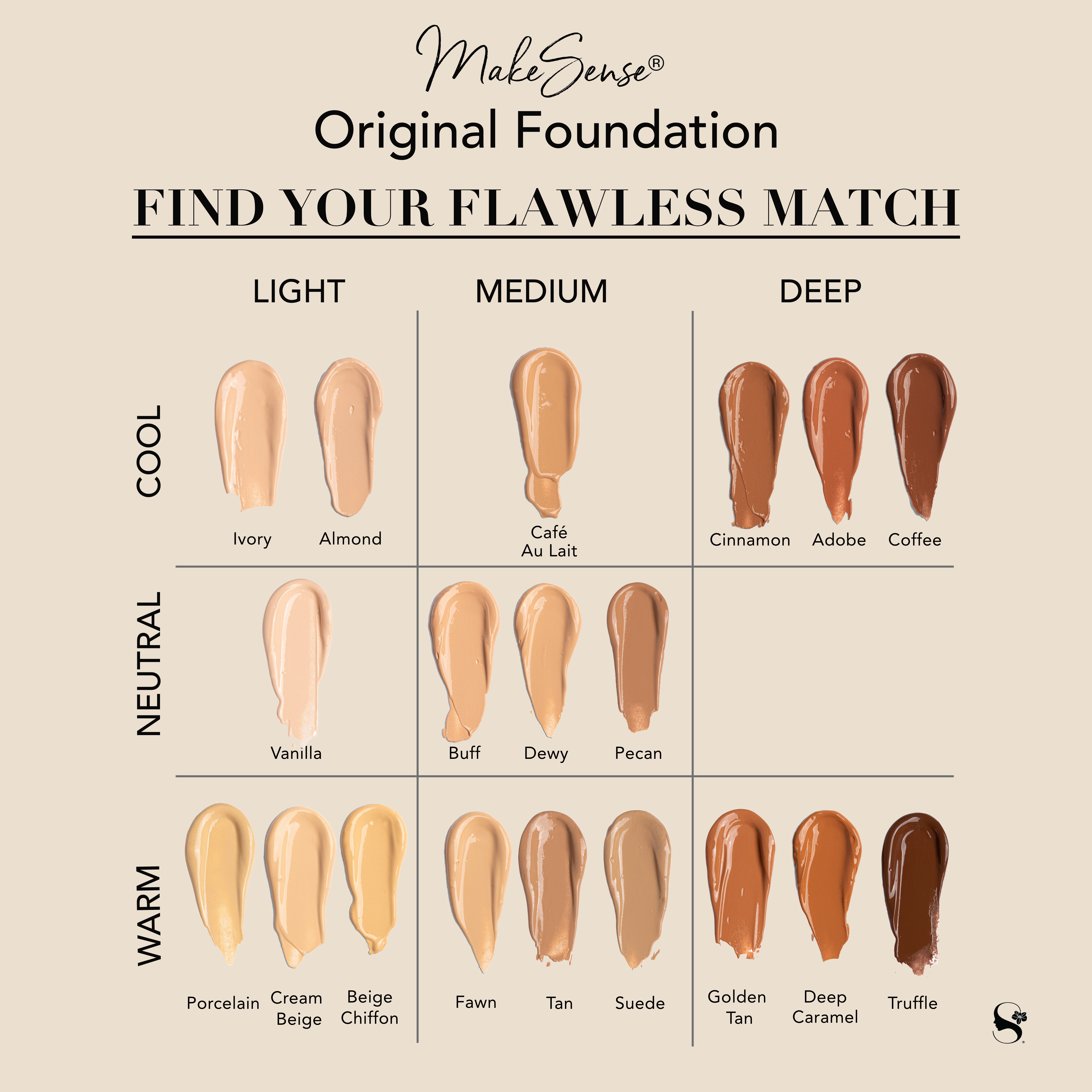
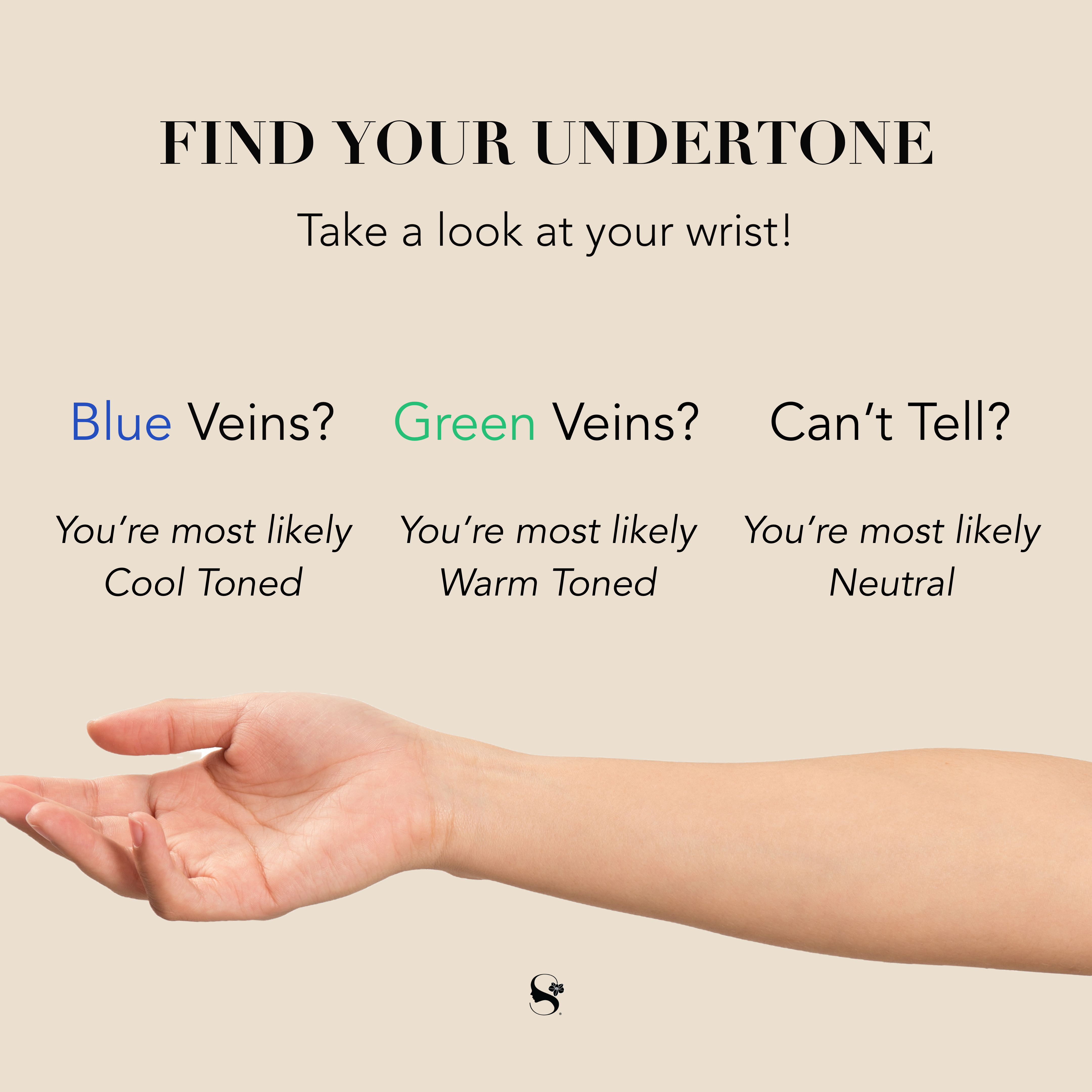
The Four Main Undertones
(And How to Identify Yours)
Cool:
Cool undertones are the icy elegance of the undertone world. Think of porcelain, rose, or plum vibes. If your skin carries pink, red, or blue hues and you tend to burn before you tan, you're in cool company.
Cool skin is made for rose-toned blushes and berry lips but finding the right foundation? That can be a challenge. If it’s too warm, it goes peachy-orange. If it’s too dark, it turns gray. Balance is everything.
Silver Test: If silver jewelry makes your skin sing and you’re prone to rosy flushes or cool-toned veins, you’re likely cool-toned.
Cool Light Skin:
Look for foundations with pink or soft blue tones to even out any redness and give a porcelain finish.
Cool Medium Skin:
Use soft rose beige or cool-neutral foundations to enhance your natural flush without overpowering it.
Cool Deep Skin:
Try deep plum, cranberry, or blue-red undertone shades to keep skin looking rich and vibrant. Anything too light or beige might turn ashy.
Some foundation matching tips for Cool Undertones…
Look for foundations described as:
- Rose beige
- Cool neutral
- Blue-red or plum undertones
- Neutral-cool
Avoid these pitfalls:
- Shades labeled “Warm” or “Golden” (turns orange)
- Yellow-toned shades (looks off or dull)
- Anything too light or beige (can go ashy)
Pairing Concealer with Cool Undertones: Pink, Red, Blue
| Skin Tone | Brightening Concealer | Correcting Concealer | Spot Concealing |
| Light | Cool ivory or porcelain | Light salmon or peach | Cool-toned ivory |
| Medium | Rose beige or soft mauve | Medium peach or salmon | Neutral-cool beige |
| Deep | Deep berry or wine beige | Orange/red-orange | Plum, cranberry, or cocoa |
Pro Tip: Avoid yellow or golden tones because they can make cool skin look sallow. Go for pinkish or mauve undertones to maintain that fresh, cool finish.
Warm:
Warm undertones are the golden-hour glow-getters. Think sun-kissed, beachy vibes with a built-in filter. If your skin beams with yellow, peach, or golden hues, you're in warm territory.
Warm undertones can give the skin a naturally radiant, glowing look but here's the kicker: too much red or pink in your foundation can turn the whole thing muddy or orange. And if you’re matched with something too cool, expect your glow to fizzle into dullness real quick.
Golden Tip: If gold jewelry makes your skin beam and you tan easily (or look bronzed in minutes), you're likely warm.
Warm Light Skin:
Choose foundations with peach, yellow, or golden undertones. Avoid pinky or ivory shades because they’ll mute your glow.
Warm Medium Skin:
Go for golden beige, amber, or warm tan. A bit of orange undertone is okay as long as it doesn’t veer into pumpkin territory.
Warm Deep Skin:
Look for rich gold, bronze, or copper-based shades. Steer clear of anything labeled “cool” or “rosy” because it’ll turn ashy fast.
Some foundation matching tips for Warm Undertones
Look for foundations described as:
- Golden beige
- Warm tan
- Amber or bronze
- Neutral-warm (but avoid red undertones)
Avoid these pitfalls:
- Cool pink-based shades (they flatten your glow)
- Too-neutral or beige (can read dull or dusty)
- Overly red-warm shades (may pull orange)

Pairing Concealer with Warm Undertones: Golden, Peach, Yellow
| Skin Tone | Brightening Concealer | Correcting Concealer | Spot Concealing |
| Light | Light golden beige | Peach (for blue/purple) | Neutral-warm ivory |
| Medium | Golden tan or honey beige | Apricot | Warm medium beige |
| Deep | Golden caramel | Orange or deep peach | Bronze or golden cocoa |
Pro Tip: Warm skin loves warmth so lean into peachy correctors and golden-based concealers to avoid looking dull or chalky.

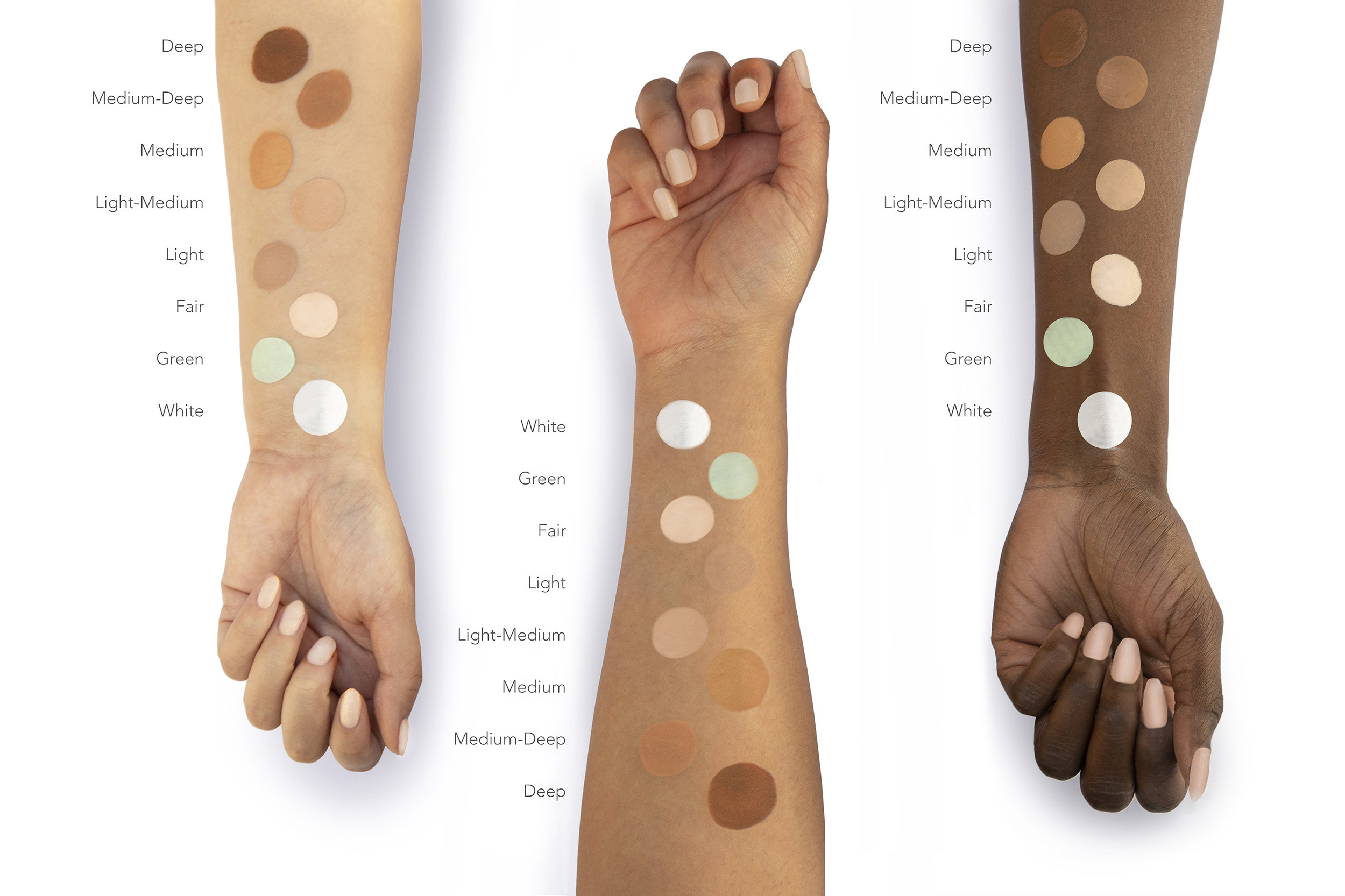
Neutral:
Neutral undertones are the unicorns hiding in plain sight…balanced between warm and cool, but often the hardest to match when foundation formulas lean too far one way.
If you’ve ever felt like everything almost works but nothing works perfectly, you might be neutral. You don’t look obviously pink or golden, and your veins might be both blue and green.
Jewelry Test: Both gold and silver jewelry look equally fab? Welcome to the neutral club.
Neutral Light Skin:
Choose neutral ivory or soft beige tones that are not too pink, not too yellow. Anything overly warm or cool will stand out.
Neutral Medium Skin:
Look for soft brown shades such as natural beige, warm beige, or balanced tan. These keep the harmony without tipping them into orange or pink.
Neutral Deep Skin:
Go with neutral cocoa, espresso, mocha, or deep bronze with a balance of undertones. Steer away from red-heavy or overly golden formulas.
Some foundation matching tips for Neutral Undertones
Look for foundations described as:
- Shades labeled “neutral,” “natural,” or “balanced”
- Beige, tan, or ivory with subtle undertones
- Foundations that don’t pull red or gold
Avoid these pitfalls:
- Peach or golden tones (can look off)
- Cool pinks (can read chalky or ashy)
- Anything overly corrective in tone, neutral skin needs flexibility
Pairing Concealer with Neutral Undertones: Balanced between Warm + Cool
| Skin Tone | Brightening Concealer | Correcting Concealer | Spot Concealing |
| Light | Light beige | Soft peach | Neutral ivory |
| Medium | Natural tan | Medium peach | Balanced beige |
| Deep | Cocoa neutral | Burnt orange | Espresso or deep bronze |
Pro Tip: Neutral skin does best with concealers that aren’t overly warm or cool—look for "natural" or "true beige" descriptions to keep tone harmony.
Olive:
Here’s where it gets interesting, olive undertones are the mysterious undertone. Often misdiagnosed, misunderstood, and mistreated by foundation shades that leave skin looking too pink, too orange, or just...off.
Olive skin is often mistaken for neutral or simply warm, but here’s the truth bomb...it lives in the neutral territory but with an unexpected twist.
Olive skin has yellow (warm) + blue (cool) undertones with little to no red, which gives it that greenish or gray cast. The lack of red is what gives olive skin its distinct tone. It can still lean warm or cool depending on where it lands on the spectrum.
This duality is why olive can appear neutral, yet standard neutral shades can still pull too pink or peach on true olive skin.
And because olive undertones often lack red, traditional foundations meant for “warm” skin (which usually have yellow and red) may turn too orange, while cool foundations may look chalky or ashy.
Warm Olive: Has a sun-kissed, golden look so neutral bases with a hint of yellow or gold work best because it pulls to the warmer side of the spectrum. If gold jewelry flatters more, they likely lean towards warm olive.
Cool Olive: Leans toward a bluish tone which can make the skin appear slightly ashy or gray. Look for neutral or slightly cool foundations to prevent ashiness. If silver pops better, they may be a cooler olive.
This should help fine-tune whether to steer toward more golden or more neutral-olive foundations.
Some foundation matching tips for Olive Undertones…
Start with Neutral-Yellow or Olive-Designated Shades
Look for foundations described as:
- Olive or Olive Beige
- Golden olive
- Neutral-warm (as long as they’re not too peachy or red-based)
- Green-tinted correctives (in rare, very cool-leaning olive tones)
Avoid these pitfalls:
- Shades labeled simply “Warm” that lean orange
- “Cool” pink-based shades (they turn gray on olive skin)
- Too-yellow tones (can make olive skin look sallow or flat)

Pairing Concealer with Olive Undertones
(Yellow + Blue, Minimal Red — slight green or gray cast)
| Skin Tone | Brightening Concealer | Correcting Concealer | Spot Concealing |
| Light | Neutral-olive ivory | Light peach | Olive beige |
| Medium | Golden-olive tan | Apricot | Olive medium |
| Deep | Olive cocoa or golden brown | Burnt orange or terracotta | Deep olive or bronze |
Pro Tip: Avoid overly red or pink formulas because those can turn gray on olive skin. Neutral or golden-olive concealers are your BFFs.
Your Match Game, Mastered!
Matching your skin products shouldn’t feel like solving a Rubik’s Cube…no stress, no guesswork.
With a little know-how and the right tools, you're officially armed to take on color matching like a pro.
Whether you're craving light-as-air coverage with a tinted moisturizer, a full-glam moment with foundation,
or just a pop of brightness from your go-to concealer, you’re ready to face the day, literally.
Remember: Your undertone is your power. Your skin tone is your canvas.
And you? You’re the artist.
So go forth and glow, beauty boss. You’ve got this…match made. Confidence delivered.